
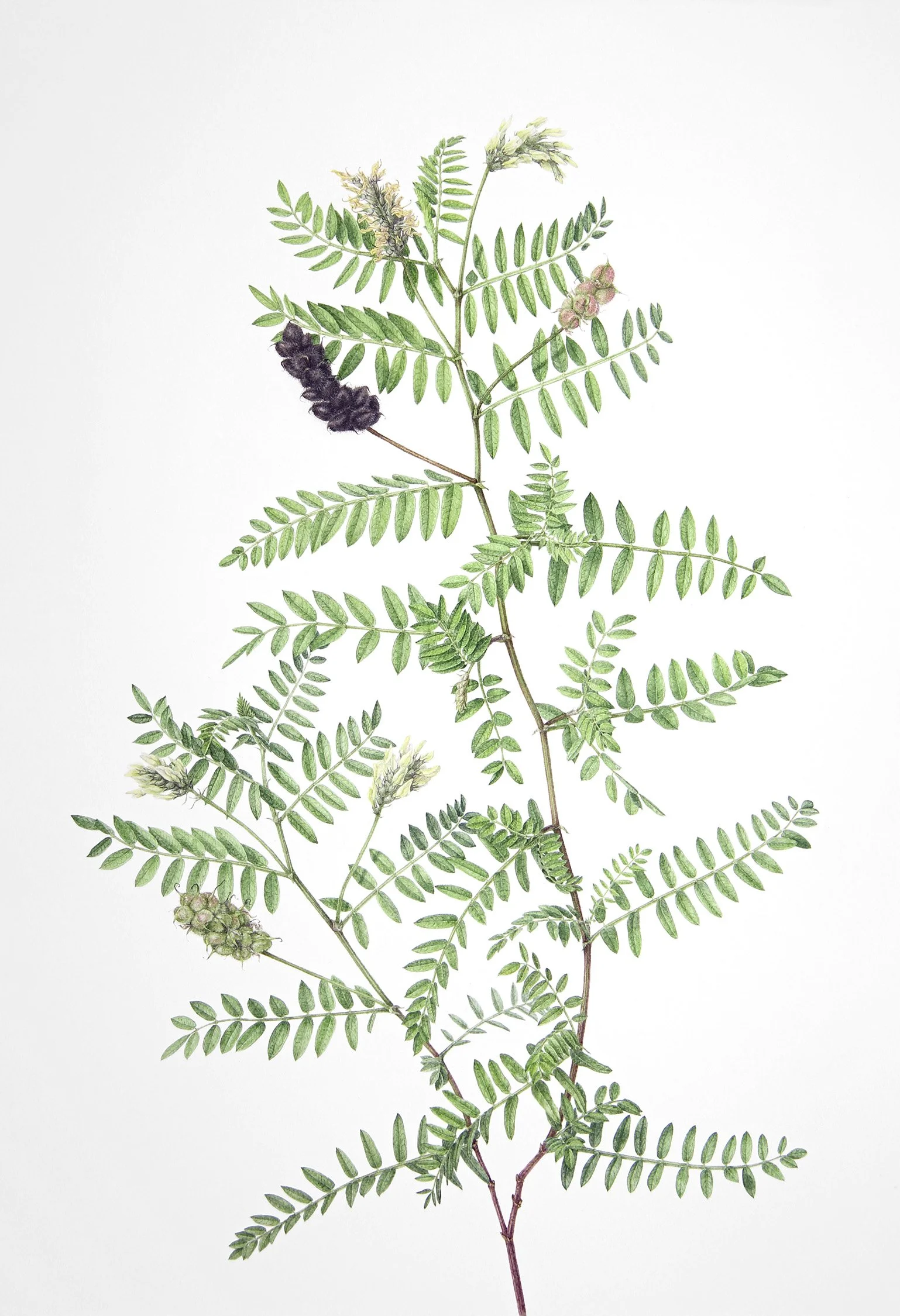
Astragalus cicer (Cicer Milkvetch), 2026
watercolour on paper, 22” x 15”
A long-lived perennial native to Europe, Astragalus cicer had a relatively late introduction to North America. It was brought to the United States from Sweden in 1926 and to Canada from Russia in 1931, in both cases as a forage crop for cattle. Initially, the plant proved difficult to establish, but with selective breeding, new cultivars now thrive and provide nutritious and non-bloating forage for livestock.
In addition to its agricultural value, cicer milkvetch is widely used in reclamation seed mixes intended to restore and re-establish disturbed land. Like other legumes, it can improve soil health through nitrogen fixation, while its dense root system helps prevent erosion and stabilise soil.
Despite its apparent benefits and uses, cicer milkvetch is considered an invasive species by the Alberta Invasive Species Council. The plant spreads both by seed and through its extensive root system. One plant may spread more than a metre in diameter during a single growing season, and as plants age, their rhizomes grow more vigorously. For this reason, planting cicer milkvetch in or near natural areas or native grasslands is not recommended, as it can form dense stands that outcompete native grasses and other beneficial species.