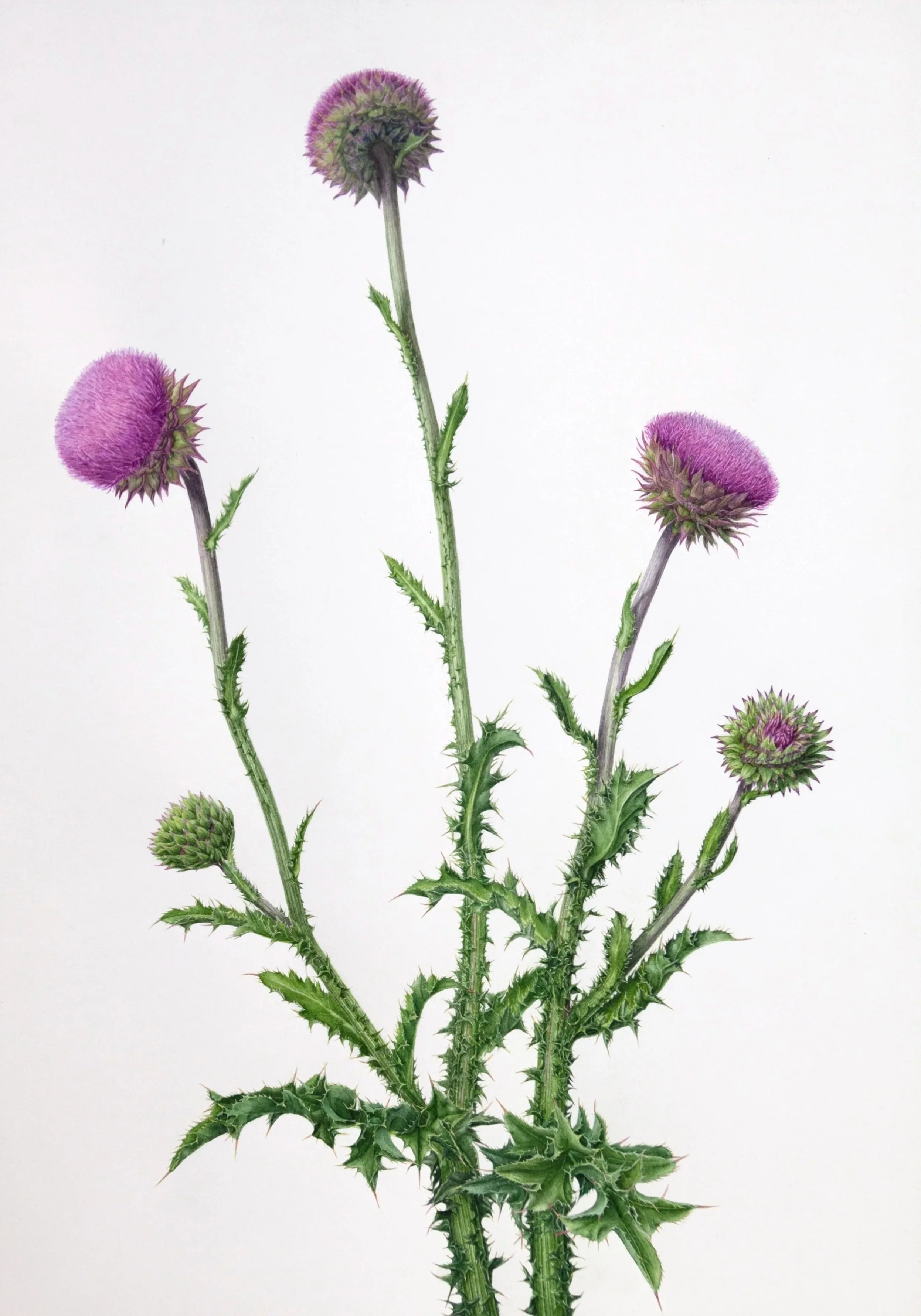
Carduus nutans (Nodding Thistle), 2024
watercolour on paper, 20” x 14”
Native to much of Europe and Asia, Carduus nutans was brought to North America through seed carried in ships’ ballast. The first recorded specimens in the United States were collected in Pennsylvania in 1853, while the earliest recorded specimen in Canada dates to 1871 in New Brunswick. Following its introduction to Saskatchewan—likely in contaminated canola seed of Argentine origin—the railway facilitated its dispersal farther west. The first herbarium record of nodding thistle in Alberta is dated 1976.
Infestations of nodding thistle can severely degrade native grasslands and pastures. Its deep taproot allows the plant to outcompete other species for water and nutrients. A single plant can have up to fifty flower heads, with each one capable of producing as many as 1,200 seeds. These seeds are dispersed by wind, water, livestock, wildlife, and human activity.
Despite its designation as a prohibited noxious weed, nodding thistle and most other thistles are edible if harvested and prepared carefully. Young stems should be collected before the flowers bloom and peeled to remove their spiny outer layer. The peeled stems have been compared to celery and can be eaten raw with dip, or added to salads and soups. They can also be cooked with salt and butter much like you would with asparagus.
Forage only in areas where you are confident plants have not been treated with herbicides or pesticides. If you are not certain of a plant's identity, do not harvest or consume it.