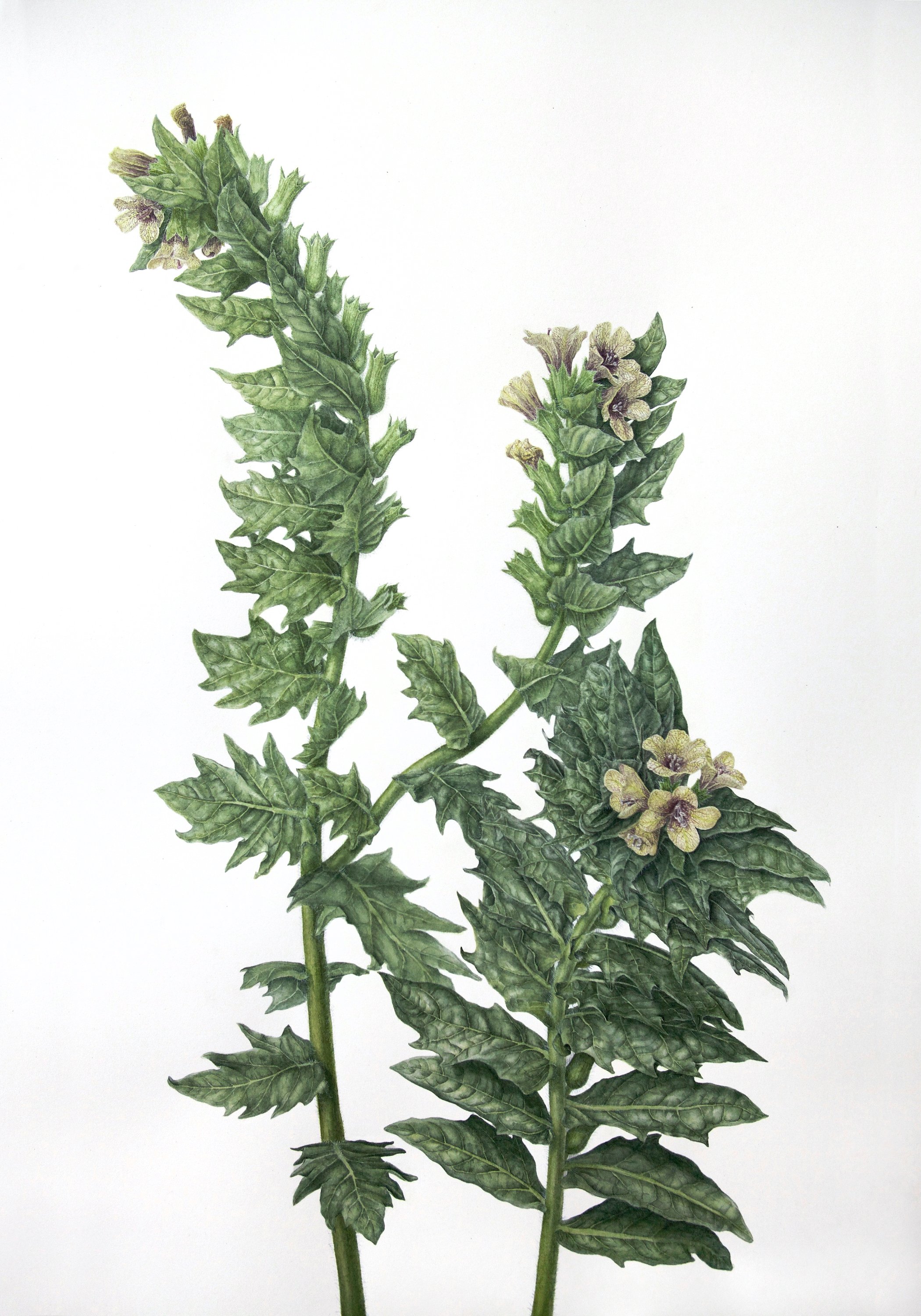
Hyoscyamus niger (Black Henbane), 2024
watercolour on paper, 20” x 14”
Native to regions surrounding the Mediterranean and extending east into Iran, Hyoscyamus niger was introduced to North America as early as the seventeenth century by European settlers who cultivated it as both a medicinal herb and an ornamental plant. Early records from Ontario date to the late nineteenth century, and the earliest herbarium specimens collected in Alberta indicate that black henbane was present around Edmonton by the 1920s.
An annual or biennial plant, black henbane reproduces solely by seed. A single plant can produce anywhere from 10,000 to 500,000 seeds in one growing season. Left unmanaged, the species can quickly dominate disturbed ground and agricultural land. All parts of the plant contain toxic alkaloids and are highly poisonous to humans and animals if ingested. Symptoms of poisoning may include drowsiness, impaired vision, hallucinations, nausea, convulsions, coma, and in severe cases, death.
Today, black henbane is despised due to its invasiveness, foul odour, and toxicity, yet for centuries it has been valued for its medicinal properties. Medieval healers used henbane as a pain reliever, to treat various conditions from gout to insomnia, and as an anesthetic during childbirth and surgery. Modern medicine continues to utilise alkaloids found in henbane. In low doses, scopolamine can treat motion sickness and nausea, while atropine is used by ophthalmologists to dilate pupils during eye exams.
Owing to its hallucinogenic properties, henbane has a storied past. Since antiquity, it has been added to alcoholic beverages to enhance their intoxicating effects. Once an addition to some beer recipes, brewers were forced to stop using henbane following the 1516 Bavarian Purity Law that banned any ingredients in beer other than barley, hops, water, and yeast.
Over the centuries, henbane has been responsible for poisonings, murder, assassinations, capital punishment, and euthanasia. Some historians have suggested that Viking Berserkers may have imbibed henbane-infused beverages to induce the fearless rage for which those Scandinavian warriors became famous.
Perhaps most famously, henbane is associated with witchcraft. During witch hunts of the Early Modern period, alleged witches were accused of ritually using ”flying ointments” containing henbane and other plants in the nightshade family. Applied to the skin, these unguents could induce vivid hallucinations of flight—perhaps contributing to the enduring belief that witches flew on broomsticks.