
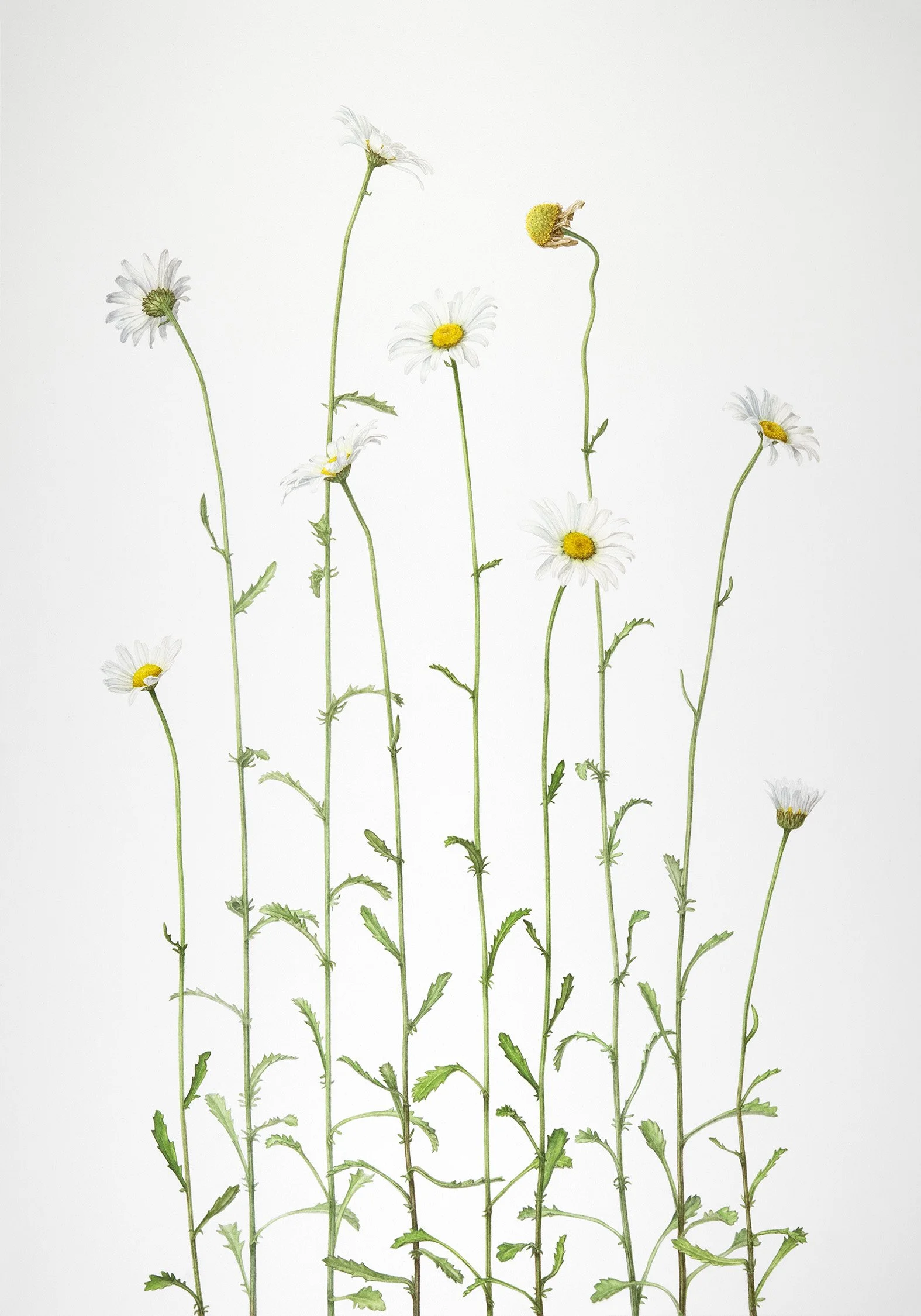
Leucanthemum vulgare (Oxeye Daisy), 2026
watercolour on paper, 20” x 14”
Native to Europe and Asia, Leucanthemum vulgare was introduced to North America as a medicinal herb and garden ornamental, and may also have arrived as a contaminant in agricultural seed. According to popular accounts, the daisy first escaped cultivation in the 1600s from the garden of Massachusetts’s first Governor, John Endecott. By 1785 it was already considered a troublesome weed. The plant reached Canada by the 1860s, and the first records in Alberta date to the 1920s. It has only become a widespread problem in this province during the latter half of the twentieth century.
Like many invasive species, oxeye daisy spreads through rhizomes and prolific seed production. A single composite flower head, made up of hundreds of small florets, can produce more than 500 seeds, and those seeds can reach maturity within ten days of flowering. Seeds are commonly dispersed through contaminated grass seed, hay, manure, and soil.
Oxeye daisy poses a significant threat to forage production in pastures and meadows. While cattle generally avoid grazing on the plant, other livestock will consume it. Up to 40% of the seeds consumed can remain viable after digestion, allowing infestations to spread when animals are moved between grazing areas.
The similarly invasive scentless chamomile and oxeye daisy are often mistaken for charming native wildflowers, despite the fact that there are no white daisy species native to Alberta. They are also confused with non-invasive ornamental varieties sold through garden centres, and may still be found in wildflower seed mixes.
While we focus on its invasive qualities, many people do not realise that oxeye daisy is entirely edible. Young leaves are rich in vitamins A and C, and can be eaten fresh or cooked as with other leafy greens. The flowers are also edible, though most foragers consider the unopened flower buds to be the most flavourful part of the plant. Harvested just prior to blooming, the buds are subtly sweet, with a flavour reminiscent of pineapple, and can be eaten fresh, added to salads, or preserved like capers.
Forage only in areas where you are confident plants have not been treated with herbicides or pesticides. If you are not certain of a plant's identity, do not harvest or consume it.